Everything You’re Dying to Know About Websites
Websites have been around since the early ’90s. But unless you’re a hardened coder, web designer, or internet nerd like us, you might not have experience with the ins and outs of website ownership.
If that’s the case, you probably have questions. And you’re not alone. Here are a few that we hear all the time.
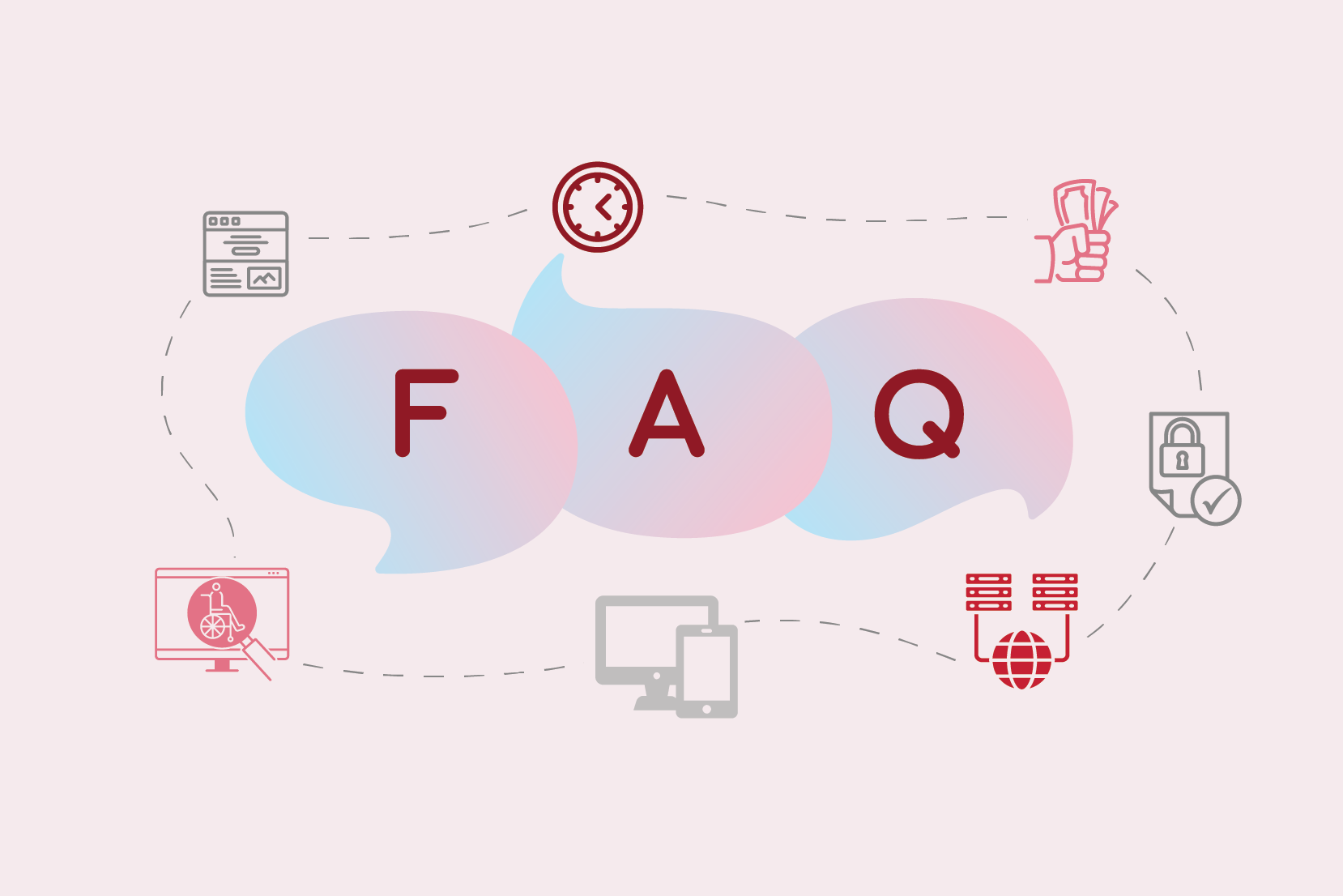
Frequently Asked Questions About Websites
Q. Do I Really Need One?
Do you own a business? Then yes, you need a website. Really.
We know that getting your internet darling up and running feels like a lot. But having an online presence makes your business more credible and more visible.
While a Facebook page is a great place to start, keep in mind that you don’t actually own your social media accounts. Plus, on Facebook, you aren’t the star of the show. There are hundreds and thousands of other businesses like yours competing for attention. With a website, you get to stand front and center on the stage.
Q. How Much Will a Website Cost Me?
Websites do cost money, unfortunately. But how much you spend is totally up to you. You could save a penny or two by creating a template site with the help of Wix or Squarespace. But it’s generally better to spring for a custom one if you are able. This will help your business stand out and even offer some SEO benefits!
Q. What’s the Timeline for Getting a Website Up and Running?
Again, this will depend on whether you decide to go the custom or the template route. Generally speaking, you should plan on around 7 - 10 weeks if you really want to invest in quality SEO research, content creation, and design.
Q. What is the Difference Between a Web Page, a Website, and a Web Server?
A web page is a single document you create to be displayed on the internet. A website [link to “What’s the Difference Between a Domain and a Website?], on the other hand, is a group of web pages that are connected under one domain name. And a web server [link to “What Is Web Hosting?”] is the computer that stores the documents and software that make up a website.
Q. What Does Website Responsiveness Mean?
In this highly technical world, websites are accessed from a wide range of different device types. For your website to be considered responsive [link to Just My Type(ography)], it must render well on all the possible screen sizes and device types that are out there. In other words, the goal is to keep computer nerds, phone addicts, and tablet aficionados all happy.
Q. What Does SSL Mean?
SSL is an acronym that stands for Secure Sockets Layer. By obtaining SSL certificates for your website, you assure visitors that the space and connection are secure. There’s a lot more to learn about the different types of SSLs. If you want a deeper dive, check out this article. [link to future SSL article.]
Q. What Does Website Accessibility Mean?
The internet is for everyone, so make sure your website reflects that fact. By creating an accessible website [insert link to future accessibility article], you ensure that no one is prevented from interacting with each web page because of disabilities or socio-economic differences. Keep in mind that good website accessibility equals a good overall user experience . . . which equals good business. A win-win for everyone!
If you want to make your website more accessible, be sure to check out our free accessibility tool. It will give your website visitors the opportunity to adjust the font, font size, letter spacing, and more on each page of your site. That way, you can ensure that any and all accessibility roadblocks can be removed by the user.
Q. Explain Web Hosting to Me . . .
Web hosting is an essential part of creating a website that can be visited at any time by internet users across the world. Essentially, it’s a computer that stores all the data and coding related to your website . . . and it’s always connected to the internet. This way, users have 24/7 access to the site.
Did we miss any of your most pressing questions about websites? Be sure to let us know!